
India's pharmaceutical exports to Iran have been hit owing to depleting rupee reserves in the West Asian country because of India stopping the import of crude oil from it in 2019 following US sanctions. Pharmaceutical exports dropped 71.25 per cent in April-August this year over the same period last year. The data from the Pharmaceutical Exports Promotion Council (Pharmexcil) showed exports to Iran had declined 31.29 per cent in 2022-23 as against the previous financial year.

Russia dominated Saudi Arabia in oil supplies as the world's fastest-growing major economy for fossil fuels in October, relegating the Kingdom to third place. Iraq was India's top oil supplier, according to the data from Vortexa. Saudi Arabia's decline in India's oil market has coincided with Russia's rise, and ironically occurred amid growing diplomatic ties between Riyadh and New Delhi. Saudi Crown Prince Mohammed bin Salman Al Saud is visiting India this month to meet Prime Minister Narendra Modi.
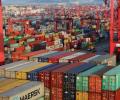
The decline in exports is mainly on account of poor demand in India's key destinations -- the Europe and the US -- and it may take some more months for the situation to improve. The demand scenario is "not looking very good as far as Europe is concerned, and the US also we have seen a decline in demand. "For the next 2-3 months, I think the demand scenario does not look very optimistic," DGFT (Director General of Foreign Trade) Santosh Kumar Sarangi told reporters.

India, the world's biggest consumer of gold, imported 967 tonnes of gold in 2011.
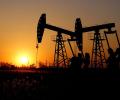
Investors and companies should brace for higher commodity prices over the next few weeks in the backdrop of Russian troops attacking Ukraine on Thursday. Meanwhile, US President Joe Biden threatened new sanctions against Russia for an act of aggression against Ukraine. All this, analysts believe, can push prices of key commodities such as crude oil, ammonia, urea, potash, and phosphates higher.

The rupee depreciated further by 13 paise to hit a new life-time closing low of 82.30 against the US dollar on Friday as a firm American currency and risk-averse sentiment among investors weighed on the local unit. Moreover, a negative trend in domestic equities and elevated crude oil prices sapped investor appetite, forex traders said. At the interbank foreign exchange market, the local currency opened at 82.19, then fell further to 82.43. It finally settled at an all-time low of 82.30 against the American currency, registering a decline of 13 paise over its previous close.

From the Sensex pack, Bharti Airtel, Asian Paints, Infosys, Bharat Electronics, Tech Mahindra and Eternal were major laggards. However, Maruti, Tata Steel, Bajaj Finance, Bajaj Finserv, Trent and Tata Consultancy Services were among the gainers.
India's exports rose by 2.14 per cent to $36.27 billion in July while the trade deficit almost tripled to $30 billion during the month due to over 70 per cent rise in crude oil imports, according to official data released on Friday. Imports shot up by 43.61 per cent to $66.27 billion in the month compared to July 2021, the data showed. The trade deficit was $10.63 billion in July 2021.
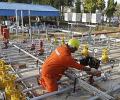
Petroleum Minister Dharmendra Pradhan on Tuesday put state-owned ONGC and OIL on notice saying oil and gas reserves they hold need to be monetised through joint ventures with domain experts or the government will take them away and auction them. Speaking at BNEF Summit, he said state-owned firms cannot indefinitely sit on resources when the nation is a net importer of oil and gas. Despite India bidding out acreages to private and other companies since the 1990s, Oil and Natural Gas Corporation (ONGC) and Oil India Ltd (OIL) hold a "sizeable number of acreage for years," he said.

On Thursday, Oil Minister Dharmendra Pradhan had stated that the government was reworking the subsidy-sharing formula.

This is good news for the central government at a time when crude oil prices are rising.

Puri said the government has a moral duty to provide energy at affordable rates to consumers.

There is the sliding price of crude oil - which is now trading at less than half of the $147-per-barrel peak that it touched three months ago.

With the earnings season drawing to a close, stock markets will take cues from global trends and foreign investors' trading activity this week, analysts said. The US FOMC (Federal Open Market Committee) minutes will be the major highlight this week, experts said. "This week, there are fewer cues on the macro and micro fronts, as the Q1 earnings season has concluded.

Geo-political reasons are to be blamed for spike in global oil prices, he says.

Food inflation had soared to a year's high of 18.32 per cent for the week ending December 25 before declining to 16.91 per cent in the subsequent week.

Petrol price on Sunday was hiked by 50 paise a litre and diesel by 55 paise, taking the total increase in rates since resumption of daily price revision less than a week back to Rs 3.70-3.75 per litre. Petrol in Delhi will now cost Rs 99.11 per litre as against Rs 98.61 previously while diesel rates have gone up from Rs 89.87 per litre to Rs 90.42, according to a price notification of state fuel retailers. Rates have been increased across the country and vary from state to state depending upon the incidence of local taxation.

"We are exploring if Indian oil firms can open accounts in banks like Dubai-based Noor Islamic Bank so they can undertake a direct transfer of money for oil they buy from Iran," a senior government official said.

Stocks of Indian companies with exposure to Europe fell on Tuesday amid concerns about the impact on their sales in case the Russia-Ukraine crisis worsens and the US and its allies impose economic sanctions on Russia. While top conglomerates, including Reliance Industries, the Tata group, and Aditya Birla Group, said they did not have any significant exposure to Russia, executives of some of the oil and gas, pharmaceutical, and tea companies said they were monitoring the situation closely as they earned substantial income from the region. Russian President Vladimir Putin on Monday ordered troops into two breakaway regions of eastern Ukraine after announcing that Russia would recognise their independence.
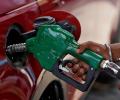
The price of petrol was hiked to Rs 101.39 a litre in Delhi from Rs 101.19 and to Rs 107.47 per litre in Mumbai, according to a price notification of state-owned fuel retailers. Diesel rates went to Rs 89.57 a litre in Delhi and Rs 97.21 in Mumbai.
